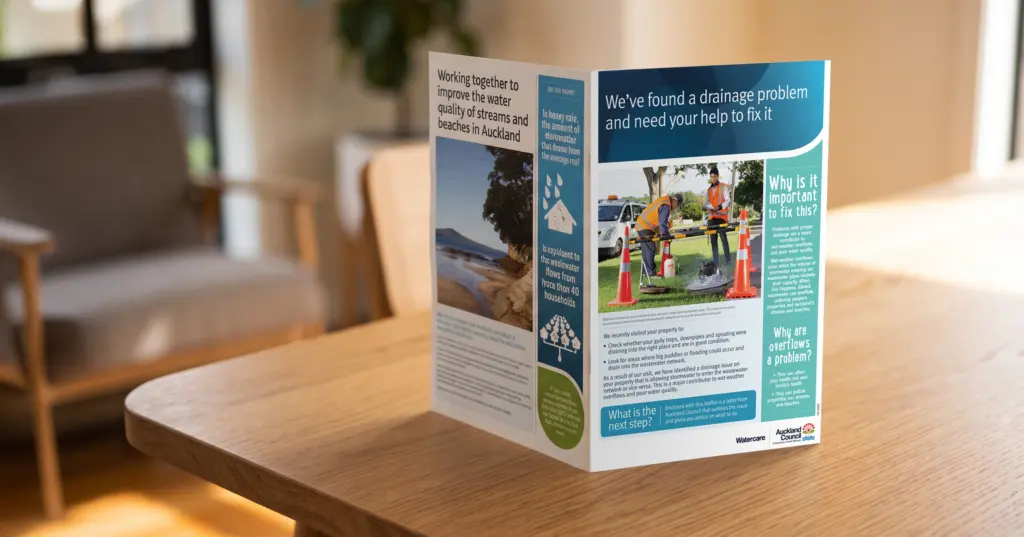
If you have opened your post recently to find a letter from the Auckland Council Licensing & Compliance Proactive Compliance Projects Team, you are certainly not alone.
Since extreme weather events like Cyclone Gabrielle highlighted the vulnerabilities in our regional infrastructure, Auckland Council and Watercare have significantly stepped up their joint investigation programme across older, established suburbs. Inspectors are actively checking private stormwater and wastewater systems in areas like Remuera, Mt Eden, Ponsonby, and Epsom to help reduce wet-weather overflows and protect local beaches and streams.
Receiving a compliance notice can feel daunting, but most requested repairs are straightforward. Here is a guide on why Council is issuing these notices, how their inspections work, and how to get your property compliant quickly.
Why is Auckland Council Inspecting Private Drainage?
In many of Auckland’s older suburbs, stormwater (rainwater) and wastewater (sewage from toilets, sinks, and laundries) run through separate pipe networks.
However, during heavy rain, clean stormwater can accidentally enter the wastewater network through low-lying drains, cracked pipes, or incorrect downpipe connections. In fact, during heavy rain, the amount of stormwater that drains from an average roof is equivalent to the wastewater flows from more than 40 households.
When this massive volume of rainwater floods the wastewater pipes, it can exceed their capacity. The result is diluted wastewater overflowing out of public manholes, onto private properties, and contaminating our streams and beaches.
How Did Council Find the Issue? (Smoke Testing)
Many homeowners ask how Council identified a problem without stepping inside the house.
Watercare contractors use a specialised testing method where non-toxic smoke is blown down the public wastewater pipes. If the smoke rises out of your roof downpipes, outdoor paving, or low gully traps, it proves there is an open pathway or cross-connection where stormwater can enter the sewer system.
The 4 Most Common Drainage Issues Identified
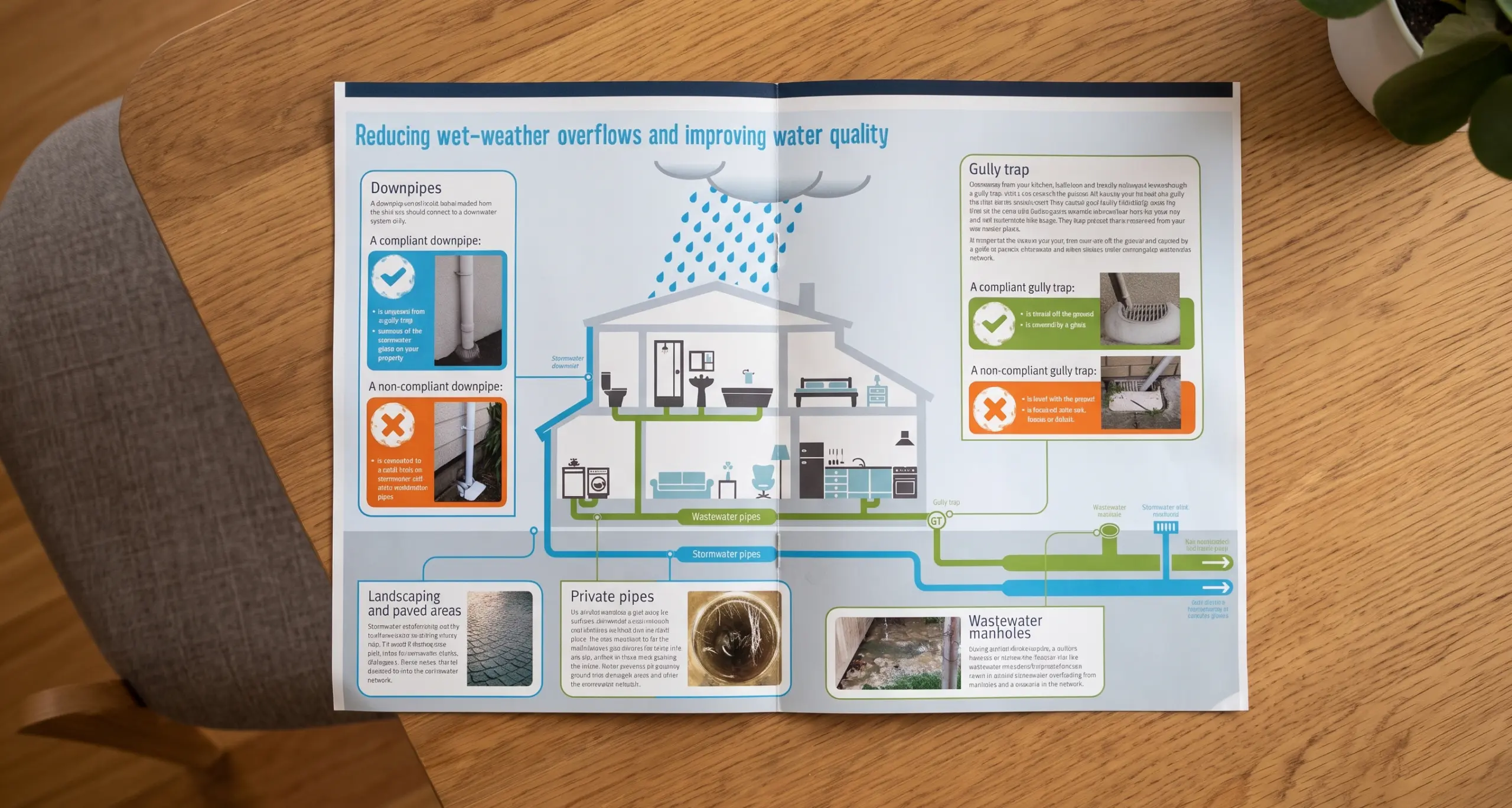
During these proactive visits, inspectors check spouting, downpipes, and gully traps. The main issues flagged in Council notices include:
1. Low or Non-Compliant Gully Traps
- The Function: A gully trap is the outdoor drain covered by a grate where kitchen, bathroom, and laundry wastewater exits your home. It is designed to prevent foul air escaping and ensure blockages overflow outside rather than inside your house.
- The Issue: If a gully trap sits level with the surrounding lawn or paving, surface water pooling during heavy rain pours directly into the sewer.
- The Requirement: Council rules state a gully trap must sit at least 25mm above paved surfaces or 75mm above unpaved/lawn surfaces.
- The Fix: Raising the gully trap surround by fitting a gully dish riser or extending the collar.
2. Downpipes Connected to the Wastewater System
- The Function: Roof downpipes must direct rainwater strictly into the stormwater system.
- The Issue: In older properties, downpipes were sometimes plumbed directly into a wastewater gully trap, sending thousands of litres of rainwater straight into the sewer line during storm events.
- The Fix: Disconnecting the downpipe from the gully trap and redirecting it into a proper stormwater drain.
3. Damaged or Cracked Private Underground Pipes
- The Issue: Old ceramic or concrete wastewater pipes can crack over time or suffer root intrusion. During heavy rain, saturated ground water seeps through the soil into these broken pipes (a process called infiltration).
- The Fix: Carrying out a CCTV camera inspection to pinpoint the break, followed by patch repairs or trenchless pipe relining.
4. Surface Runoff from Landscaping and Paved Areas
- The Issue: Driveways, patios, or garden beds graded so that overland water pools around gully traps or wastewater manholes.
- The Fix: Installing proper catch pits or re-grading surface drainage away from wastewater access points.
What Should You Do Next?
Your Council notice will state a clear deadline to provide evidence that repair work has been completed or is underway.
- Review Your Inspection Record: Check the enclosed diagram from Council detailing the specific non-compliant point on your site.
- Determine Who Can Do the Work: Minor maintenance, such as fitting a simple plastic gully dish riser, can legally be completed by a homeowner under the Building Code. However, if the fix involves altering pipes, clearing root blockages, redirecting downpipes, or underground repairs, you must engage a registered drainlayer.
- Take Clear Photo Evidence: Once fixed, take photos showing the completed work. For raised gully traps, hold a measuring tape or ruler against the rim to clearly show it meets the 25mm (paved) or 75mm (unpaved) height requirement.
- Submit Proof to Council: Email your photos, measurements, and any drainlayer invoices to [email protected] with your property address in the subject line.
How The Drain Company Can Help
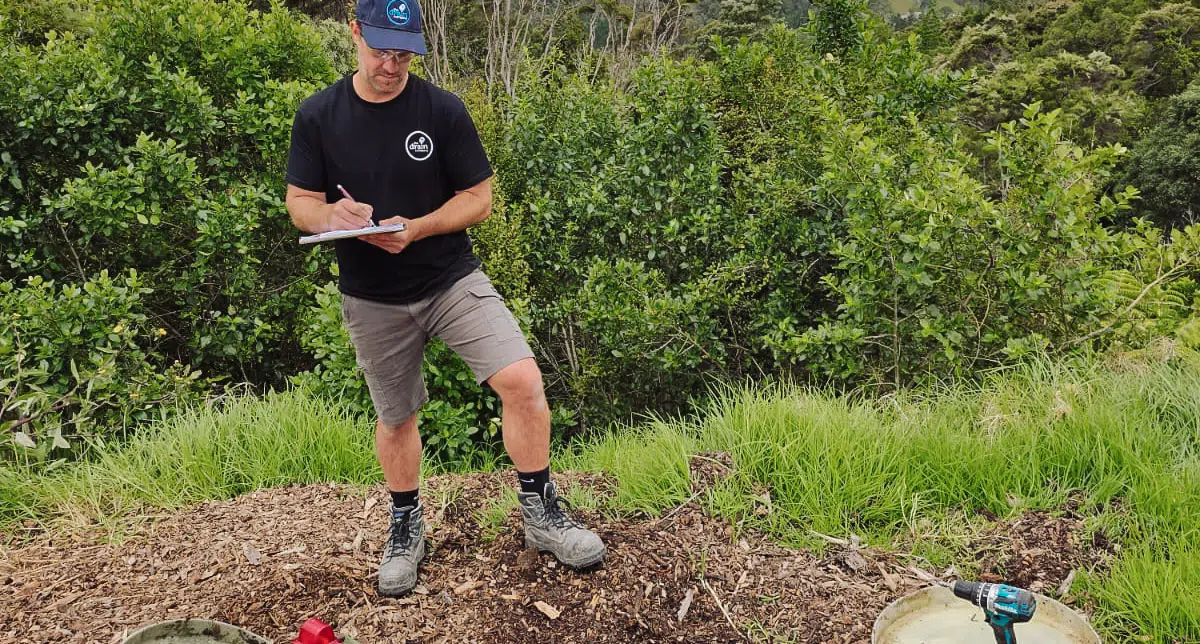
Resolving a Council cross-connection notice doesn’t need to be stressful or overly expensive. The Drain Company assists homeowners across Auckland with fast, verified drainage solutions:
- CCTV Inspections & Fault Locating: We identify exact pipe breaks, root damage, or illegal connections underground without unnecessary digging.
- Gully Trap Extensions & Downpipe Redirection: Our certified drainlayers carry out compliant repairs that meet both Auckland Council and Watercare standards.
- Trenchless Pipe Lining: If your underground pipes are cracked, we can rehabilitate them internally without destroying driveways or gardens.
- Photo Proof & Compliance Reporting: We supply you with measured photographic proof and formal job records ready to send straight to the Council compliance officer.
Need assistance resolving an Auckland Council drainage notice?
Contact The Drain Company today on 0800 247 862 or email us at [email protected] to arrange a site visit.